
Sexy Fandom with Molly Case

Halloween Hotties

— Molly Case on October 12th, 2009 @ 3:19 pm Costuming, Web Sites

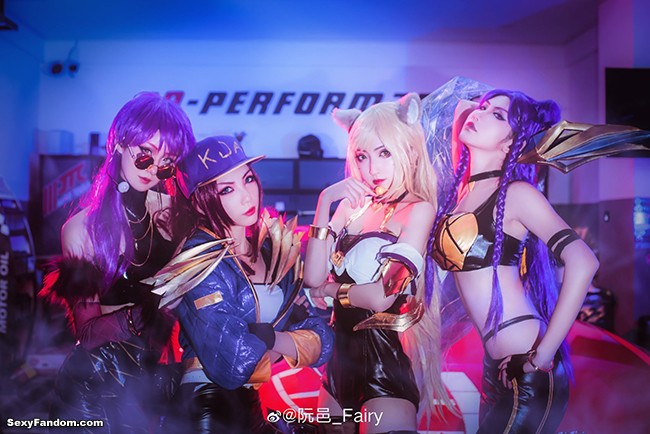
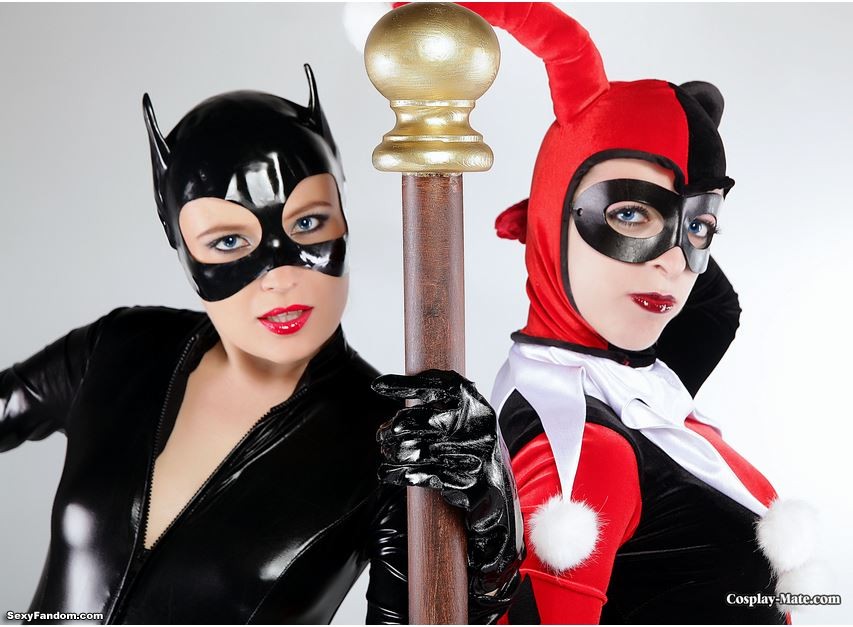
yeselguapo halloween hottiesI don’t know what Yes, El Guapo means, but yeselguapo.com is a new site from the people at Vibe. Most importantly, they just posted a Halloween Hotties gallery. It is kind of just random pictures from around the web, but a lot of them are random pictures from around the web featuring cute girls in sexy Halloween costumes. Their writing style is enjoyably cute as well, as they point out that Halloween is the “one night it’s okay to dress like a hooker and not get picked up by a cop…unless that cop is their hot friend who is also dressed like a slutty cop.”

Sakura Live Cosplay

— Molly Case on October 11th, 2009 @ 11:16 pm Costuming, Web Sites

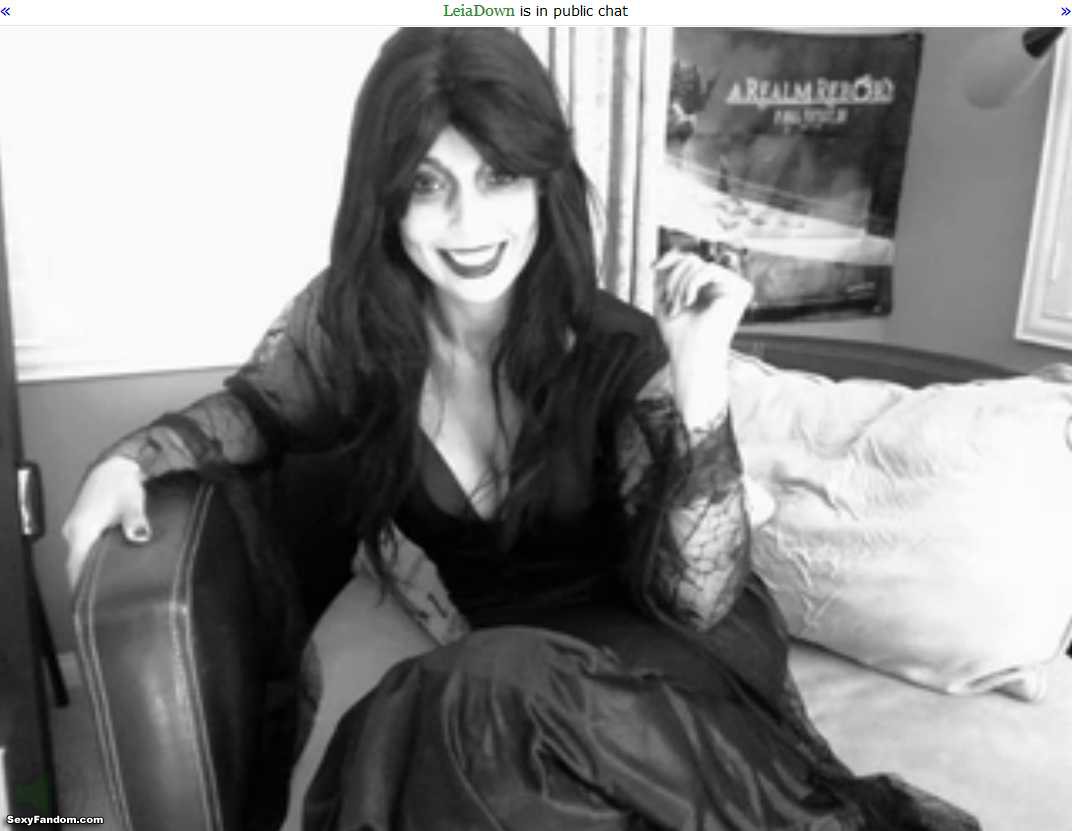
sakura live cosplayI wish there were more sites with cosplay content. So far, I am intrigued by what the fine people at Sakura Live are doing. They actually have live English-speaking camgirls who actually in Japan, some of whom dress up in all sorts of costumes.

Little Dark Red Riding Hood Costume

— Molly Case on August 13th, 2009 @ 10:43 am Costuming

little red riding hood horny construction workerI don’t care how hot the weather is because I am not going to wear gothic garb in the midday sun and my family has good central air conditioning.

I have been looking for something to wear to play Little Red Riding Hood and the Horny Construction Worker and Heavy Red have been kind enough to create just the thing. The Heavy Red site says: “The limited edition Heavy Red costume Little Dark Red Riding Hood, is so beautiful with its dark elegance. The red and black dress made from weighted matte jersey and rayon hangs beautifully. The black arrow point bodice is adorned with a black bow. The dress is fully lined, has a side zipper, adjustable straps and straps that tie in the back to give you the perfect fit. The dress comes with a matching capelette which is fully lined with black satin. The outfit also includes: -miniature picnic basket. This costume is one you will want to wear over and over, it is truly amazing! Please note: All Halloween Costume Sales are final and only exchangable for size”.

The manufacturers seem to believe it is a Halloween costume, not necessarily intended for other forms of roleplay.

Goths in Hot Weather

— Molly Case on August 12th, 2009 @ 3:44 pm Costuming, Web Sites

goths in hot weatherAll I had to do was mention that many fanboys at the Comic Con were disgustingly sweaty from the extreme heat and that a lot of people showed up in steampunk costumes. That was all I had to do to induce dozens of people to send me emails with a link to Goths in Hot Weather. GothsInHotWeather is one of those ironic sites where they obsess about something while claiming not to really like it or care about it. Sort of like Perez Hilton. In case this was not painfully apparently already, the site addresses the issue of some gothic attire being a poor fit for overly warm weather. Humorous concept and domain, but it sort of states the obvious.

Guinness World Record Steampunk Photo

— Molly Case on August 2nd, 2009 @ 11:32 am Costuming, General Fandom, Real Life

laweekly comic con photosThe LA Weekly has a gallery of forty of their best photos from the Comic Con. I think my favorite was the steampunk animatronic girl costume and the Wonder Woman costume in the same frame. Sums up some of the factionalization at the Comic Con this year. The most extreme example of warring factions was the huge turnout for the Twilight programming coupled with the protesters carrying picket-style signs and heckling the lines for the Twilight panel discussions. Wonder Woman and steampunk girl represent different sorts of costuming, but they both look happy in their photo which is nice. According to the LA Weekly, the steampunk presence at the Comic Con was so large that the Guinness Book of World Records came out to take the record-setting largest steampunk gathering photo on the steps of the convention center.

What if I need to know more about Dalek costumes?

— Molly Case on December 26th, 2005 @ 6:38 am Costuming, Gadgets, General Fandom, Movies

The Daleks were actually operated from inside by short operators who had to manipulate their eyestalks, domes and arms, as well as flashing the lights on their heads in sync with the actors supplying their voices. The Dalek cases were built in two pieces; once an operator stepped into the lower section the top would be lowered onto him. The operators looked out between the circular louvres just beneath the dome that were lined with mesh to conceal their faces.

Unfortunately, as well as being hot and cramped the Dalek casings also muffled external sounds, making it difficult for the operators to hear the director’s commands or studio dialogue. The top sections were also too heavy to lift from the inside, which meant that the operators could be trapped in them if the stagehands forgot to let them out. John Scott Martin, a Dalek operator from the original series, commented in a documentary that it would have been easier to operate a Dalek if one was an octopus, due to to the many controls involved.

Early versions of the Daleks were either rolled around on nylon castors or propelled by wheels connected to hand cranks by bicycle chains. While castors were adequate for the Daleks’ debut serial, which was shot entirely at the BBC’s Lime Grove Studios, for The Dalek Invasion of Earth, Terry Nation wanted the Daleks to take to the streets of London for location filming. As a result, the base of the costume had to be deepened to accommodate small pnuematic tyres. However, the bumpy flagstones of Central London caused the Daleks to rattle as they moved and it was not possible to remove this noise from the final shoot. Also added to the prop was a small radar dish at the rear of the casing, in an attempt to explain why these Daleks, unlike the ones in their first serial, were not dependent on static electricity drawn from the floors of the Dalek city for their motive power.

Later versions of the prop had more efficient wheels and were simply propelled by the operators’ feet. Occasionaly, modified tricycles were used. Even so, they were so heavy that when going up ramps they often had to be pushed by stagehands out of camera shot. In addition, the difficulty of operating all the prop’s parts at once also contributed to the occasionally jerky movements of the Dalek. The latest model of the costume still has a human operator within, but the movement of the dome and eyestalk is now remotely controlled so that the operator can concentrate on the smooth movement of the Dalek and its arms.

The Dalek voice, a staccato delivery, was initially developed by voice actors Peter Hawkins (who had also provided the voice for the popular children’s animated series Captain Pugwash) and David Graham, who would vary the pitch and speed of the lines according to the emotion needed. Their voices were further processed electronically by Brian Hodgson at the BBC Radiophonic Workshop. Although the exact sound-processing devices used have varied over the years, the original 1963 effect used EQ to boost the mid-range of the actor’s voice, then subjected it to ring modulation with a 30 Hz sine wave. The distinctive harsh grating vocal timbre this produced has remained the pattern for all Dalek voices since then. Notable voice actors for the Daleks include Roy Skelton. In the 2005 series, the Dalek voice is provided by Nicholas Briggs, speaking into a microphone connected to a voice modulator. Briggs has also done Dalek and other alien voices for audio plays.

The non-humanoid shape of the Dalek, unlike anything that had been seen on television before, did much to enhance the creatures’ sense of menace. With no familiar points of reference, it was a far cry from the traditional “bug-eyed monster” of science fiction that Doctor Who series creator Sydney Newman wanted the show to avoid. The unsettling form of the Daleks, coupled with their alien voices, also made many believe for a while that the props were wholly mechanical and operated by remote control.

Manufacturing the props was also expensive. In scenes where many Daleks had to appear, some of them would be represented by wooden replicas (Destiny of the Daleks) or, in the early black and white episodes, life-size photographic enlargements (The Power of the Daleks). In stories involving armies of Daleks, the BBC effects team even turned to using commercially-available toy Daleks, manufactured by Louis Marx & Co. A typical example of such use can be observed in Planet of the Daleks. Judicious editing techniques also made it look like there were more Dalek props than were actually available.

Initially there were four fully functioning props commissioned for the first serial, constructed from BBC plans by Shawcraft Models (which became known in fan circles as “Mk I Daleks”). Shawcraft were also commissioned to construct twenty or so Daleks for the two Dalek movies in 1965 and 1966 (see below). Most of these props from the movies filtered back to the BBC and were seen in the televised serials, notably in The Chase, which was released even before the first movie’s debut. The remaining props not bought by the BBC were either donated to charity or given away as prizes in competitions.

Those still in BBC hands were reused several times but eventually years of storage and repainting took their toll. By the time of the Sixth Doctor’s Revelation of the Daleks, the props were manufactured out of fibreglass, and were lighter and more affordable to construct than their predecessors. These Daleks were slightly bulkier in appearance around the mid-shoulder section, and also had a slightly redesigned base which was more vertical at the back. Minor changes were made to the design thanks to these new methods of construction, including alterations to the lower skirting as well as the mid-shoulder section incorporating the arm boxes, which were now one single unit, with the vertical bands encircling the casing also included in the fibreglass mould.

These were repainted in grey for the Seventh Doctor serial Remembrance of the Daleks and designated as “Renegade Daleks” while another redesign, painted in white and gold, became the “Imperial Dalek” faction. The new methods of construction also allowed the BBC Effects Department to build non-working “dummy” Daleks meant for use in scenes involving pyrotechnics. Several of these props were blown up in controlled explosions during the filming of Remembrance of the Daleks, which would not have been cost-efficient with working props. (via Wikipedia)